The Handover Floor: What Actually Survives a Change of Tenants
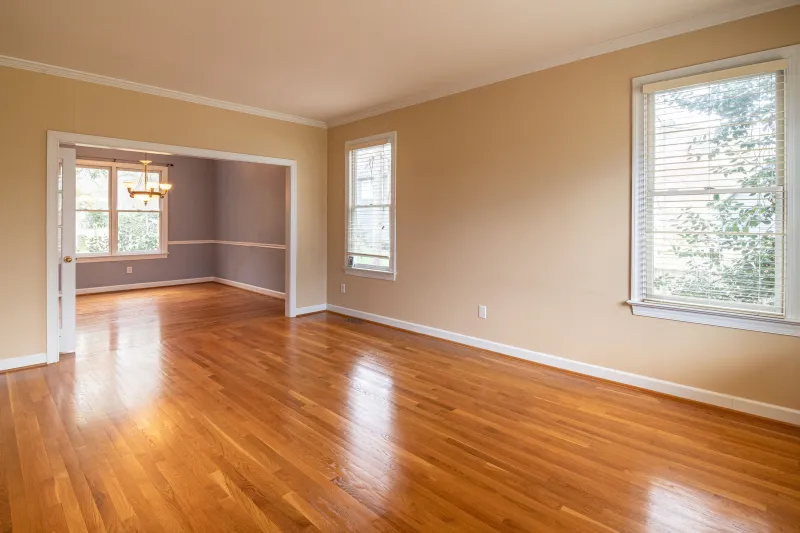
Photo: empty unfurnished UK rental flat living room with new wood effect flooring and daylight, via images.pexels.com
Anyone who has stood in an empty flat at 4pm on a Friday, clipboard in hand, knows the feeling. The tenant has gone, the keys are back, and the floor you installed three years ago is now the star exhibit in a check-out report. Wear and tear is a grey area at the best of times, and flooring is where the greyest area of all tends to sit.
So this isn't a piece about the cheapest floor per square metre. It's about the floor that keeps its head down through a decade of handovers, cleans up without being ruined, and doesn't hand either side a reason to argue. Call it the handover floor.
Wear and tear isn't damage — but the difference is easier to defend on a better floor
Deposit schemes are reasonable in principle. A floor that has faded slightly along a hallway, or shows the faintest traffic lane between the kitchen and the sofa, is normally fair wear and tear. A floor that is torn, gouged to the backing or lifting at the seams is not.
The problem is that the line between the two is drawn by whoever is holding the camera. A cheap, thin floor blurs that line quickly — it scuffs, it dents, it delaminates at a doorway, and suddenly a landlord is arguing about a replacement when a repair would have done. A floor with a bit more substance gives you a much clearer story: this was damage, this was age, and here's the invoice to prove what it costs to fix.
Specifying for the deposit inspection means specifying for the argument you'd rather not have.
The wear layer number is the one that matters
For luxury vinyl tile, the wear layer figure is the whole story. It's quoted in millimetres and it is usually the first thing that gets quietly downgraded when a refurbishment budget tightens.
A 0.3mm wear layer is broadly a domestic-lightweight product. It will look decent on day one and increasingly tired by year three in an entry hall. Move up to the 0.55mm range and you are into light commercial territory — the sort of thing that copes with a pushchair, a bike wheeled through the hall and a cleaner who means well. Beyond that you're into shop-floor products, which is usually overkill for a two-bed but not absurd in a shared entrance or a block's common areas.
Ask for the figure in writing. "Heavy domestic" on a showroom label doesn't tell you much.
The realistic shortlist, room by room
Luxury vinyl tile. The default for good reason. Water-tolerant, easy to clean, available in plank and tile formats, and repairable if you buy spares and fit it in a way that allows individual pieces to be lifted. Choose a rigid-core click version for speed of turnaround, or glue-down for a flatter, quieter result.
Engineered wood. Beautiful in a house that commands the rent; less forgiving in a flat that turns over every twelve months. The wear layer here is the veneer, measured in millimetres of real timber. Anything under about 3mm can't be sanded back more than once or twice, so treat it as a finish, not an heirloom. It also dislikes standing water, which rules it out of bathrooms and makes it a considered choice in kitchens.
Carpet. Still the right answer for bedrooms and stairs in many rental houses — warmer, quieter, and more forgiving of a scuff than a hard floor. Go for a low-pile, solution-dyed option in a mid-tone twist. Cheap polypropylene in pale grey is the single most common mistake in the sector; it looks superb in the photos and shows every mark by the first inspection.
Sheet vinyl. Unfashionable, unfairly so. In bathrooms, kitchens and utility spaces it's still the most watertight, most cleanable and most repairable-per-pound option on the market. A well-fitted sheet vinyl with a coved edge does more for a rental than most of what's trending on interiors feeds.
Laminate. Fine in a quiet long-let to a careful tenant. Less fine where there's any chance of a spill sitting on a seam overnight. If the property has ever had a washing machine leak, walk away from it.
Neutral doesn't have to mean beige
There's a lazy assumption that rental floors should be the colour of a filing cabinet. That's not quite right. What you want is a floor that doesn't fight with anyone's furniture and doesn't show the everyday grime of a busy hallway.
Mid-tones do both jobs. A warm mid-oak plank, a soft greige, a muted limestone-effect tile — these photograph well, hide a certain amount of real life, and let a tenant put their own rug down without the whole room clashing. Very pale floors amplify every hair and every crumb. Very dark floors show dust within an hour of a clean. The sweet spot is somewhere in the middle, with a matte or low-sheen finish rather than a high gloss, which scratches read terribly on.
Where rentals actually fail
The bathroom door threshold. The strip of floor in front of the kitchen sink. The bottom of the stairs. The bit just inside the front door where shoes come off.
Those four locations account for a disproportionate share of flooring problems in rented property, and they're all predictable. Protect them properly at the specification stage — a matwell or decent entrance matting, a well-sealed threshold strip, a water-resistant product at the sink — and you'll avoid most of the callbacks.
Buy spares, and fit for repair
Order ten per cent over and leave the surplus in the loft with a note on it. Then fit in a way that lets a single damaged plank or tile come out. Floating click systems and glue-down LVT with a release-friendly adhesive both allow a local repair; a fully bonded, monolithic sheet of anything does not.
When a chair leg punches through a plank, the difference between a £40 repair and a £900 replacement is entirely down to whether you planned for it at the start.
So what justifies the spend?
Not the warranty length on the box. Justify it on three things: how many tenancies the floor will see, how hard those tenancies will be, and how expensive it is to replace the whole thing because one room failed.
A floor that lasts fifteen years in a flat with two-year lets has done seven handovers. Spread the cost across those and a mid-range LVT with a proper wear layer looks like the cheapest thing in the building — it's the one you won't be re-specifying in 2029.