After the Last Board Goes Down: A Protection Plan for the Final Weeks of a Refit
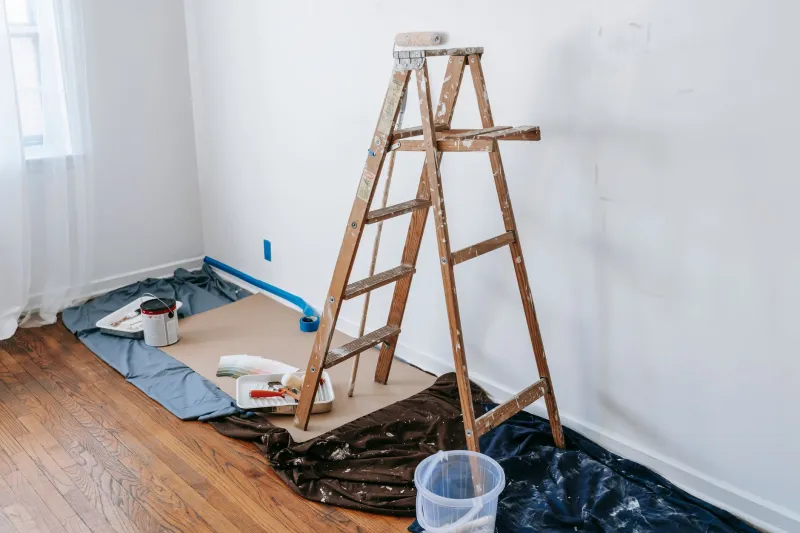
There's a moment in every refit when the flooring goes down and everyone involved quietly exhales. The hard part is over. Except it isn't, because the floor now has to survive the bit of the job where people are carrying ladders, trailing extension leads and dragging a fridge across it.
We've seen more damage done in the fortnight after a floor is laid than during the installation itself. Not because anyone is careless, but because protection is usually an afterthought — a dust sheet pulled out of a van, a few offcuts of cardboard, a bit of hope. It's worth planning it the same way you'd plan the floor itself.
Dust sheets are for dust, not for damage
A cotton dust sheet stops paint splatter and not much else. It offers no resistance to a step ladder foot, a toolbox corner, or a stack of tiles being set down with a bit too much enthusiasm. Worse, some sheets trap grit underneath them, and every footstep then works that grit into the surface like a mild abrasive.
If you've paid for a solid wood, engineered or luxury vinyl floor, an old sheet is the equivalent of wearing a paper bag in the rain. It's there, technically.
Boards over sheets, most of the time
For anything beyond a quick sanding job, hard protection is the sensible default. Heavy-duty floor protection boards — the fibreboard or hardboard type, not the thin corrugated stuff — spread load and take impacts. Tape the joints, but use a low-tack residue-free tape designed for the job, and never leave standard gaffer tape down for a week in a warm room unless you enjoy removing adhesive.
A quick hierarchy that works for most UK domestic refits:
- Hardboard or protection board: decorating, snagging, light trade traffic
- Heavy-duty boards plus a breathable membrane: anything involving plastering or wet trades nearby
- Corrugated plastic or foam: short-term protection during furniture delivery, not a substitute for boards under a ladder
- Nothing at all: only once the room is genuinely finished and the last person has left
Watch the point loads
A stepladder with four small feet concentrates a surprising amount of weight. On a soft engineered oak or a warm luxury vinyl, that can leave dents that don't bounce back. The same goes for the feet of a washing machine being slid into place, a stack of paint tins, or the corner of a workbench someone has 'just put down for a minute'.
If heavy items are coming in, put a board under them before they land rather than after. It's much easier to slide a board into position than to explain a compression mark to a client.
Moisture is the quiet problem
This is the one that catches people out. New plaster, freshly skimmed walls, screed that hasn't fully dried, or a dehumidifier running in the next room — all of that moisture has to go somewhere. If you've sealed a new floor under a non-breathable plastic sheet for three weeks, you've created a small greenhouse at floor level.
Solid and engineered timber particularly dislikes being trapped under impermeable coverings while the room is still drying out. Where wet trades are still active, ventilate the space, use breathable protection, and lift the covering at the end of each working day if you can. If your flooring is a luxury vinyl or a laminate, moisture is less of a worry from above, but trapped damp underneath can still cause problems with the subfloor.
Sequence the last few weeks properly
The order of operations matters more than most people expect. A workable sequence for a typical room:
- Flooring installed and left to settle
- Protection boards laid immediately
- Decorating, with boards kept down and edges lifted only where needed
- Snagging walk-through, ideally with the flooring contractor present
- Final clean of the floor itself, boards lifted
- Furniture delivery, with felt pads fitted before anything goes down
That last point deserves its own paragraph. Fit felt pads to every leg before the furniture enters the room, not after. Once a sofa is in position, it tends not to move again until it's being dragged out for the next refit.
The handover conversation
If you're working with a flooring contractor, ask at quote stage what protection is included after installation. Some include it, some don't, and plenty assume the client or the main contractor is handling it. Getting that clear in writing avoids the awkward conversation where everyone agrees the floor was perfect when the fitter left and somehow isn't now.
A good contractor will also want to see the room at handover, before the furniture arrives. It's much easier to resolve a question about a mark or a joint when the room is still empty and the light is good.
Protection is part of the spec
Treat protection as a line item in the flooring plan, not a roll of dust sheet grabbed on the way out. Boards, tape, felt pads and a sensible sequence are cheap compared with the cost of refinishing or replacing a floor that was perfectly good three weeks earlier.
The floor doesn't know it's finished. It's just been laid. It's the rest of the job that has to be organised around it.